Monday, January 24, 2011

Aviation fuel

Aviation fuel

Aviation fuel is a specialized type of petroleum-based fuel used to power aircraft. It is generally of a higher quality than fuels used in less critical applications such as heating or road transport, and often contains additives to reduce the risk of icing or explosion due to high temperatures, amongst other properties.


Most aviation fuels available for aircraft are kinds of petroleum spirit used in engines with spark plugs i.e. piston engines and Wankel rotaries or fuel for jet turbine engines which is also used in diesel aircraft engines. Alcohol, alcohol mixtures and other alternative fuels may be used experimentally but are not generally available.

Avgas is sold in much lower volumes, but to many more individual aircraft, whereas Jet fuel is sold in high volumes to large aircraft operated typically by airlines, military and large corporate aircraft.

The Convention on International Civil Aviation, which came into effect in 1947, exempted air fuels from tax. Australia and the USA oppose a worldwide levy on aviation fuel, but a number of other countries have expressed interest.

Avgas
Avgas is a high-octane fuel used for aircraft and racing cars. The term avgas is a portmanteau for aviation gasoline, as distinguished from mogas (motor gasoline), which is the everyday petroleum spirit used in cars. Avgas is typically used in aircraft that use reciprocating or wankel engines.

Jet fuel
Jet fuel is a clear to straw colored fuel, based on either an unleaded paraffin oil (Jet A-1), or a naphtha-kerosene blend (Jet B). It is similar to diesel fuel, and can be used in either compression ignition engines or turbine engines.

In use
Aviation fuel is often dispensed from a tanker or bowser which is driven up to parked aircraft and helicopters. Some airports have pumps similar to filling stations that aircraft must taxi up to. Some airports also have permanent piping to parking areas for large aircraft.

Regardless of the method, aviation fuel is transferred to an aircraft via one of two methods: overwing and underwing. Overwing fuelling is used on smaller planes, helicopters, and all piston-engine aircraft. Overwing fuelling is similar to car fuelling — one or more fuel ports are opened and fuel is pumped in with a conventional pump. Underwing fuelling, also called single-point, is used on larger aircraft and for jet fuel exclusively. For single-point fuelling, a high-pressure hose is attached and fuel is pumped in at 40 PSI and a max of 45 PSI. Anything higher needs to be stopped for it can cause damage to the wings. Since there is only one attachment point, fuel distribution between tanks is either automated or it is controlled from a control panel at the fuelling point or in the cockpit. As well, a dead man's switch is used to control fuel flow.

Because of the danger of confusing the fuel types, a number of precautions are taken to distinguish between AvGas and Jet Fuel beyond clearly marking all containers, vehicles, and piping. AvGas is treated with either a red, green, or blue dye, and is dispensed from nozzles with a diameter of 40 millimeters (49 millimeters in the USA). The aperture on fuel tanks of piston-engined aircraft cannot be greater than 60 millimetres in diameter. Jet Fuel is clear to straw in colour, and is dispensed from a special nozzle called a "J spout" that has a rectangular opening larger than 60 millimetres in diameter so as not to fit into AvGas ports. However, some jet and turbine aircraft, such as some models of the Astar helicopter, have a fuelling port too small for the J spout and thus require a smaller nozzle to be installed in order to be refuelled efficiently.
Energy content
The net energy content for aviation fuels depends on their composition. Some typical values are:
BP Avgas 80, 44.65 MJ/kg, density at 15 C is 690 kg/m3
Kerosene type BP Jet A-1, 43.15 MJ/kg, density at 15 C is 804 kg/m3
Kerosene type BP Jet TS-1, (for lower temperatures) 43.2 MJ/kg, density at 15 C is 787 kg/m3
Chemical composition
Aviation fuels consist of blends of over a thousand chemicals, primarily Hydrocarbons (paraffins, olefins, naphthenes, and aromatics) as well as additives such as antioxidants and metal deactivators, and impurities. Principal components include n-octane and isooctane. Like other fuels, blends of Aviation fuel used in piston engined aircraft are often described by their Octane rating.

Safety precautions
Any fuelling operation can be very dangerous, and aviation fuelling has a number of unique characteristics which must be accommodated. As an aircraft flies through the air, it can accumulate a charge of static electricity. If this is not dissipated before fuelling, an electric arc can occur which may ignite fuel vapours. To prevent this, aircraft are electrically bonded to the fuelling apparatus before fuelling begins, and are not disconnected until fuelling is complete. Some regions require that the aircraft and/or fuel truck be grounded as well.

Aviation fuel can cause severe environmental damage, and all fuelling vehicles must carry equipment to control fuel spills. In addition, fire extinguishers must be present at any fuelling operation, and airport firefighting forces are specially trained and equipped to handle aviation fuel fires and spills. Aviation fuel must be checked daily and before every flight for contaminants such as water or dirt.

Many airlines now require that safety belts be left unfastened should passengers be aboard when refueling happens.

Saturday, January 22, 2011

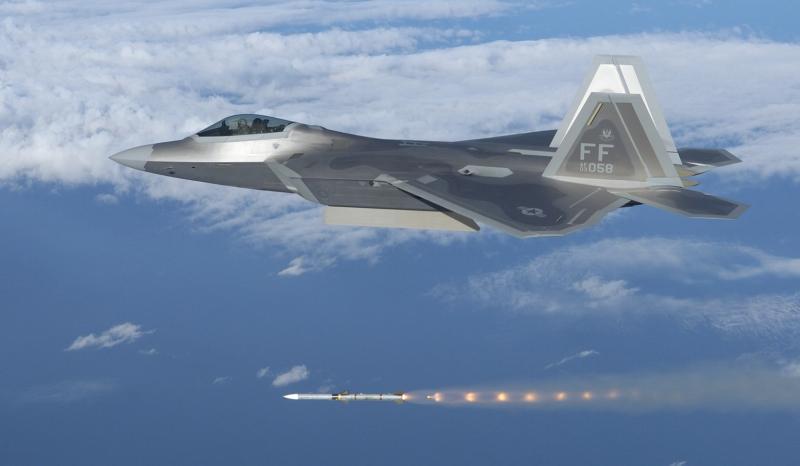
Fifth generation jet fighter


A fifth-generation jet fighter is a fighter aircraft classification used in the United States encompassing the most advanced generation of fighter aircraft. Fifth-generation aircraft are the most advanced as of 2011, designed to incorporate numerous technological advancements over the class similarly dubbed fourth generation, including all-aspect stealth even when armed, Low Probability of Intercept Radar (LPIR), high-performance air frames, advanced avionics features, and highly integrated computer systems capable of networking with other elements within the theater of war in order to achieve an advantage in situational awareness. The only currently combat-ready fifth-generation fighter, the Lockheed Martin F-22 Raptor, entered service with the U.S. Air Force in 2005.

History
Previous generation stealth aircraft, such as the B-2 Spirit and F-117 Nighthawk, lacked LPI Active Electronically Scanned Array (AESA) radars, and LPI radio networks, and were thus limited to attacking ground targets, because use of radar to engage other aircraft would have revealed the aircraft's position.
Current status
Currently the only combat ready fifth generation jet fighter is the F-22 Raptor. US fighter manufacturer Lockheed Martin uses "fifth generation fighter" to describe the F-22 and F-35 fighters, with the definition including "advanced stealth", "extreme performance", "information fusion" and "advanced sustainment". Their definition does not include super cruise capability, which has typically been associated with the more advanced modern fighters, but which the F-35 lacks. Lockheed Martin attempted to trademark the term "5th generation fighters" in association with jet aircraft and structural parts thereof, and has a trademark to a logo with the term.


Critics and alternate definitions
The use of the term fifth generation fighter has been criticized by companies whose products do not conform to these particular specifications, such as Boeing and Euro fighter as well as by other commentators, such as Bill Sweetman: "...it is misleading to portray the F-22 and F-35 as a linear evolution in fighter design. Rather, they are a closely related pair of outliers, relying on a higher level of stealth as a key element of survivability - as the Lockheed YF-12 and Mikoyan MIG-25, in the 1960s, relied on speed and altitude." The United States Navy and Boeing have placed the Boeing F/A-18E/F Super Hornet in a "next generation" fighter category along with the F-22 and F-35, as the Super Hornet has a "fifth generation" AESA radar, modest radar cross-section (RCS) reductions and sensor fusion. A senior USAF pilot has complained about fifth generation claims for the Super Hornet: "The whole point to fifth generation is the synergy of stealth, fusion and complete situational awareness. The point about fifth generation aircraft is that they can do their mission anywhere - even in sophisticated integrated air defense [IADS] environments. If you fly into heavy IADS with a great radar and sensor fusion, but no stealth, you will have complete situational awareness of the guy that kills you." Michael “Ponch” Garcia of Raytheon has said that the addition of his company's AESA radars to the Super Hornet provides "90 percent of your fifth-generation capability at half the cost."


Apparently in response to the use of the "fifth generation" term, Eurofighter has made a fifth generation checklist placing different weights on the various capabilities, and arguing that the application of the label to strike aircraft such as Lockheed-Martin's F-35 is ill advised, and even inconsistent with the aircraft's specifications. Meanwhile, Eurofighter go on to refer to Link 16 capability, an already well established system, as fulfilling a requirement for 'net-enabled operations' seemingly assigning reduced importance to maintaining low observability of such operations. In the same article Eurofighter GmbH appear to acknowledge the remarkable performance of Lockheed Martin's F-22 aircraft, while demonstrating that labels as simple as "fifth generation" may easily be devised to serve the interests of the writer.


Developments
In the late 1980s, the Soviet Union outlined a need for a next-generation aircraft to replace 4th generation fighter aircraft: MiG-29 Fulcrum and Su-27 Flanker in frontline service. Two projects were proposed to meet this need, the 4.5th generation fighter aircraft: Su-47 Berkut and the MiG-1.44 Flatpack (although later modernized MiG-35 to 4.5th generation fighter). In 2002, Sukhoi was chosen to lead the design for the new combat aircraft. The 5th generation fighter aircraft - Sukhoi PAK FA (T-50) will incorporate technology from both the Su-47 and the MiG 1.44 and when fully developed is intended to replace the MiG-29 and Su-27 in the Russian inventory and serve as the basis of the Sukhoi/HAL FGFA project being developed with India. A fifth generation jet fighter, it is designed to directly compete with the American F-22 Raptor and American/British F-35 Lightning II. The Sukhoi PAK FA performed its first flight January 29, 2010. Russia is now constructing a new stealth lightweight multirole fighter - MiG-LMFS (aka Projekt 1.27, MiG-1.27) by Mikoyan aircraft manufacturer. This jet fighter is based on the cancelled MiG 1.44.


By late 1990s, several Chinese fifth generation fighter programs, grouped under the program codename J-XX or XXJ, were identified by western intelligence sources. PLAAF officials have confirmed the existence of such a program, which they estimate will enter service between 2017-2019. Nevertheless, the United States has predicted that it may possess as much as 20 times more "advanced stealth fighters" than the Chinese by 2020. By late 2010, it had emerged that two prototypes (#2001 & 2002) of the Chengdu J-20 had been constructed and were undergoing high-speed taxi trials.. The J-20 made its first flight on 11 January 2011.


India is also developing Medium Combat Aircraft, a Twin-engined 5th generation stealth multirole fighter apart from Sukhoi/HAL FGFA project being developed with Russia. The main purpose of this aircraft is to replace the aging SEPECAT Jaguar & Dassault Mirage 2000. Unofficial design work on the MCA has been started.


Common design elements
In order to minimize their RCS, all fifth generation fighters use chines instead of standard leading edge extensions and lack canards, though the Sukhoi PAK FA T-50 has engine intake extensions that seem to function somewhat like canards and the Chengdu J-20 designers have chosen the agility enhancements of canards in spite of their poor stealth characteristics. They all have twin canted vertical tails also to minimize side RCS. Most fifth generation fighters with super maneuverability achieve it through thrust vectoring.


They all have internal weapon bays in order to avoid high RCS weapon pylons, but they all have external hard points on their wings for use on non-stealthy missions, such as the external fuel tanks the F-22 carries when deploying to a new theater.


All fifth generation fighters have a high percentage of composite materials, in order to reduce RCS and weight.


All revealed fifth generation fighters leverage commercial off-the-shelf main processors to directly control all sensors to form a consolidated view of the battlespace with both onboard and networked sensors, while previous generation jet fighters used federated systems where each sensor or pod would present its own readings for the pilot to combine in his own mind a view of the battlespace. This means that while the F-22A was physically delivered without synthetic aperture radar or situational awareness infra-red search and track it will gain these functions later through software upgrades. However any flaw in these huge software systems can knock out supposedly unrelated aircraft systems and the complexity of a software defined aircraft can lead to a software crisis with additional costs and delays.


Sukhoi calls their expert system for sensor fusion the artificial intelligence of the PAK-FA.


Situational awareness dominance
Sensor fusion and automatic target tracking are projected to give the fifth generation jet fighter pilot a view of the battlespace superior to that seen by AWACS aircraft that may be forced back from the front lines by increasing threats. Therefore tactical control could be shifted forwards to the pilots in the fighters.
However the more powerful sensors, such as AESA radar which is able to operate in multiple modes at the same time, may present too much information for the single pilot in the F-22, F-35 and T-50 to adequately use. The Sukhoi/HAL FGFA offers a return to the two-seat configuration common in fourth generation strike fighters.

Tuesday, January 11, 2011

AV-8B Harrier II


The McDonnell Douglas AV-8B Harrier II is a family of second-generation vertical/short takeoff and landing or V/STOL ground-attack aircraft of the late 20th century. It is primarily used for light attack or multi-role tasks, typically operated from small aircraft carriers and large amphibious assault ships.

Although the AV-8B Harrier II shares the designation with the earlier AV-8A/C Harrier, the AV-8B was extensively redesigned from the previous-generation Harrier GR.1A/AV-8A/C by McDonnell Douglas. British Aerospace joined the improved Harrier project in the early 1980s, and it has been managed by Boeing/BAE Systems since the 1990s.

The AV-8B is used by the United States Marine Corps. The British Harrier GR7/GR9 versions are used by the Royal Air Force and Royal Navy. Versions are also used by NATO countries: Spain, and Italy. The Harrier models are commonly referred to as the "Harrier Jump Jet".

Development
The Harrier II is notable as an example of US-UK cooperation and of Cold War defense achievements. Of note is the U.S aid funding early development of the Hawker P.1127 under the Mutual Weapons Development Program (MWDP), and the salvaging of what was left of the AV-16 Advanced Harrier Program by McDonnell Douglas, making the second-generation family possible.

McDonnell Douglas had restarted its own program which was nearing production status when British Aerospace (BAe) rejoined the program in the 1980s. They then jointly produced the aircraft. By the 1990s McDonnell Douglas merged with Boeing, and BAe was merged into BAE Systems who went on to manage the family into the early 21st century.

The first AV-8B Harrier IIs produced were commonly known as the "Day Attack" variant, and are no longer in service. Most were upgraded to Night Attack Harrier or Harrier II Plus standards, with the remainder being withdrawn from service.

Fielded in 1991, the Night Attack Harrier incorporated a Navigation Forward Looking Infrared camera (NAVFLIR). The cockpit was also upgraded, including compatibility with night vision goggles. Concurrent with the new version of the aircraft was introduced a more powerful Rolls Royce Pegasus II engine. It was originally intended to be designated AV-8D.

The Harrier II Plus is very similar to the Night Attack variant, with the addition of an APG-65 radar in an extended nose, making it capable of operating advanced missiles such as the AIM-120 AMRAAM. The radars were removed from early F/A-18 Hornets, which had been upgraded with the related APG-73. The Harrier II Plus is in service with the USMC, Spanish Navy, and Italian Navy.

The AV-8B cockpit was also used for the early trialling of DVI using a system developed by Smiths Industries.

Operational history
The AV-8B Harrier II is used by the military forces of three nations. The United States Marine Corps has operated the AV-8B and TAV-8B since 1985. The Spanish Naval air wing (Arma Aerea De La Armada) operates the AV-8B and AV-8B+, as well as a leased TAV-8B. The Italian Navy air wing (Aviazione di Marina Militare) also uses the AV-8B+ and TAV-8B.

Variants
YAV-8B
Two prototypes converted from existing AV-8A airframes.
AV-8B Harrier II
"Day Attack" variant; no longer in service. Most were upgraded to one of the following two variants, while the remainder were withdrawn from service.
AV-8B Harrier II Night Attack
Fielded in 1991; incorporates a Navigation Forward Looking Infrared camera (NAVFLIR). Upgraded cockpit, including compatibility with night vision goggles. More powerful Rolls Royce Pegasus 11 engine.
AV-8B Harrier II Plus
Similar to the Night Attack variant, with the addition of an APG-65 radar. It is used by the USMC, Spanish Navy, and Italian Navy.
TAV-8B Harrier II
Two-seat trainer version.
EAV-8B Matador II
Company designation for the Spanish Navy version.
See BAE Harrier II for the UK military version.

F - 16 Fighting Falcon

The Lockheed Martin F-16 Fighting Falcon is a multirole jet fighter aircraft originally developed by General Dynamics for the United States Air Force. Designed as a lightweight, day-time Visual Flight Rules (VFR) fighter, it evolved into a successful multirole aircraft. The Falcon's versatility is a paramount reason it has proven a success on the export market, having been selected to serve in the air forces of 25 nations. The F-16 is the largest Western jet fighter program with over 4,400 aircraft built since production was approved in 1976. Though no longer being bought by the U.S. Air Force, advanced versions are still being built for export customers. In 1993, General Dynamics sold its aircraft manufacturing business to the Lockheed Corporation, which in turn became part of Lockheed Martin after a 1995 merger with Martin Marietta.

The Fighting Falcon is a dogfighter with numerous innovations including a frameless, bubble canopy for better visibility, side-mounted control stick to ease control while under high g-forces, and reclined seat to reduce the effect of g-forces on the pilot. The F-16 has an internal M61 Vulcan cannon and has 11 hardpoints for mounting various missiles, bombs and pods. It was also the first fighter aircraft deliberately built to sustain 9-g turns. It has a thrust-to-weight ratio greater than one, providing power to climb and accelerate vertically — if necessary. Although the F-16's official name is "Fighting Falcon", it is known to its pilots as the "Viper", due to it resembling a cobra snake and after the Battlestar Galactica starfighter. It is used by the Thunderbirds air demonstration team.

The F-16 is scheduled to remain in service with the U.S. Air Force until 2025. The planned replacement is the F-35 Lightning II, which is scheduled to enter service in 2011 and will gradually begin replacing a number of multirole aircraft among the air forces of the program's member nations.

Development

Origins

Real-world experience in the Vietnam War revealed some shortcomings in American fighter capabilities, and the need for better air-to-air training for fighter pilots. The need for new air superiority fighters led the USAF to initiate two concept development studies in 1965: the Fighter Experimental (FX) project originally envisioned a 60,000 lb (27,200 kg) class twin-engine design with a variable-geometry wing, and the Advanced Day Fighter (ADF), a lightweight design in the 25,000 lb (11,300 kg) class which would out-perform the MiG-21 by 25%. However, the first appearance of the Mach-3-capable MiG-25 'Foxbat' in July 1967 resulted in the ADF effort being deemphasized in favor of the FX program, which would produce the F-15, a 40,000 lb (18,100 kg) class aircraft.

Based on his experiences in the Korean War and as a fighter tactics instructor in the early 1960s Colonel John Boyd and mathematician Thomas Christie developed the Energy-Maneuverability (E-M) theory to model a fighter aircraft's performance in combat. Maneuverability was the key to a process Boyd called the "OODA Loop" (for "Observation-Orientation-Decision-Action"). Boyd's work called for a small, lightweight aircraft with an increased thrust-to-weight ratio. A 1965 Air Force study suggested equipping its squadrons with a mix of high and low cost fighters as being the most economical.

Lightweight Fighter program
In the late 1960s Boyd gathered around him a group of like-minded innovators that became known as the "Lightweight Fighter Mafia". In 1969, the "Fighter Mafia" was able to secure funds for a "Study to Validate the Integration of Advanced Energy-Maneuverability Theory with Trade-Off Analysis". General Dynamics received $149,000 and Northrop $100,000 to develop design concepts that embodied Boyd’s E-M theory – a small, low-drag, low-weight, pure fighter with no bomb racks; their work would lead to the YF-16 and YF-17, respectively.

Although the Air Force’s FX proponents remained hostile to the concept because they perceived it as a threat to the F-15 program, the ADF concept (revamped and renamed as the ‘F-XX’) gained civilian political support under the reform-minded Deputy Secretary of Defense David Packard, who favored the idea of competitive prototyping. As a result in May 1971, the Air Force Prototype Study Group was established, with Boyd a key member, and two of its six proposals would be funded, one being the Lightweight Fighter (LWF) proposal. The Request for Proposals issued 6 January 1972 called for a 20,000 lb (9,100 kg) class air-to-air day fighter with a good turn rate, acceleration and range, and optimized for combat at speeds of Mach 0.6–1.6 and altitudes of 30,000–40,000 ft (9,150–12,200 m). This was the region in which the USAF expected most future air combat to occur, based on studies of the Vietnam, Six-Day, and Indo-Pakistani wars. The anticipated average flyaway cost of a production version was $3 million. This production plan, though, was only notional as the USAF was under no obligation to acquire the aircraft and, in fact, had no firm plans to procure the winner, which was to be announced in May 1975.

Five companies responded and in March 1972, the Air Staff announced the winners for the follow-on prototype development and testing phase were Boeing’s Model 908-909 and General Dynamics’ Model 401; however, after further review, the Source Selection Authority (SSA) would demote Boeing’s entry to third place, after Northrop’s P-600. GD and Northrop were awarded contracts worth $37.9 million and $39.8 million to produce the YF-16 and YF-17, respectively, with first flights of both prototypes planned for early 1974. To overcome resistance in the Air Force hierarchy, the 'Fighter Mafia' and other LWF proponents successfully advocated the idea of complementary fighters in a high-cost/low-cost force mix (in part, to be able to afford sufficient fighters to sustain overall USAF fighter force structure requirements); this "high/low mix" concept would gain broad acceptance by the time of the flyoff between the prototypes, and would define the relationship of the F-15 and F-16 – and, subsequently, the F-22 Raptor and F-35 Lightning II.

Flyoff
The first YF-16 was rolled out on 13 December 1973, and its 90-minute-long “official” first flight was made at the Air Force Flight Test Center (AFFTC) at Edwards AFB, California, on 2 February 1974. Its actual first flight occurred accidentally during a high-speed taxi test on 20 January. While gathering speed, a roll-control oscillation caused a fin of the port-side wingtip-mounted missile and then the starboard stabilator to scrape the ground, and the aircraft then began to veer off the runway. The GD test pilot, Phil Oestricher, decided to lift off to avoid wrecking the machine, and safely landed it six minutes later. The slight damage was quickly repaired and the official first flight occurred on time. The YF-16’s first supersonic flight was accomplished on 5 February 1974, and the second YF-16 prototype flew for the first time on 9 May 1974. This was followed by the first flights of the Northrop’s YF-17 prototypes, which were achieved on 9 June and 21 August 1974, respectively. Altogether, the YF-16s would complete 330 sorties during the flyoff, accumulating a total of 417 flight hours; the YF-17s would accomplish 268 sorties.

Air Combat Fighter competition

Three factors would converge to turn the LWF into a serious acquisition program. First, four North Atlantic Treaty Organization (NATO) allies of the U.S. – Belgium, Denmark, the Netherlands, and Norway – were looking to replace their F-104G fighter-bomber variants of the F-104 Starfighter interceptor; furthermore, they were seeking an aircraft that their own aerospace industries could manufacture under license, as they had the F-104G. In early 1974, they reached an agreement with the U.S. that if the USAF placed orders for the aircraft winning the LWF flyoff, they would consider ordering it as well. Secondly, while the USAF was not particularly interested in a complementary air superiority fighter, it did need to begin replacing its F-105 Thunderchief fighter-bombers. Third, the U.S. Congress was seeking to achieve greater commonality in fighter procurements by the Air Force and Navy. The Congress, in August 1974, redirected funds for the Navy’s VFAX program to a new Navy Air Combat Fighter (NACF) program that would essentially be a navalized fighter-bomber variant of the LWF. These requirements meshed relatively well, but the timing of the procurement was driven by the timeframe needs of the four allies, who had formed a “Multinational Fighter Program Group” (MFPG) and were pressing for a U.S. decision by December 1974. The U.S. Air Force had planned to announce the LWF winner in May 1975, but this decision was advanced to the beginning of the year, and testing was accelerated. To reflect this new, more serious intent to procure a new aircraft, along with its reorientation toward a fighter-bomber design, the LWF program was rolled into a new Air Combat Fighter (ACF) competition in an announcement by U.S. Secretary of Defense James R. Schlesinger in April 1974. Schlesinger also made it clear that any ACF order would be for aircraft in addition to the F-15, which essentially ended opposition to the LWF.

ACF also raised the stakes for GD and Northrop because it brought in further competitors intent on securing the lucrative order that was touted at the time as “the arms deal of the century”. These were Dassault-Breguet’s Mirage F1M-53, the SEPECAT Jaguar, and a proposed derivative of the Saab Viggen styled the “Saab 37E Eurofighter” (which is not to be confused with the later and unrelated Eurofighter Typhoon). Northrop also offered another design, the P-530 Cobra, which looked very similar to its YF-17. The Jaguar and Cobra were dropped by the MFPG early on, leaving two European and the two U.S. LWF designs as candidates. On 11 September 1974, the U.S. Air Force confirmed firm plans to place an order for of the winning ACF design sufficient to equip five tactical fighter wings. On 13 January 1975, Secretary of the Air Force John L. McLucas announced that the YF-16 had been selected as the winner of the ACF competition.

The chief reasons given by the Secretary for the decision were the YF-16’s lower operating costs; greater range; and maneuver performance that was “significantly better” than that of the YF-17, especially at near-supersonic and supersonic speeds. The flight test program revealed that the YF-16 had superior acceleration, climb rates, endurance, and (except around Mach 0.7) turn rates. Another advantage was the fact that the YF-16 – unlike the YF-17 – employed the Pratt & Whitney F100 turbofan engine, which was the same powerplant used by the F-15; such commonality would lower the unit costs of the engines for both programs.

Shortly after selection of the YF-16, Secretary McLucas revealed that the USAF planned to order at least 650 and up to 1400 of the production version of the aircraft. The U.S. Air Force initially ordered 15 “Full-Scale Development” (FSD) aircraft (11 single-seat and 4 two-seat models) for its flight test program, but this would be reduced to 8 (6 F-16A and 2 F-16B). The Navy, however, announced on 2 May 1975, that it had decided not to buy the navalized F-16; instead, it would develop an aircraft derived from the YF-17, which would eventually become the McDonnell Douglas F/A-18 Hornet.

Moving into production
Manufacture of the FSD F-16s got underway at General Dynamics’ Fort Worth, Texas plant in late 1975, with the first example, an F-16A, being rolled out on 20 October 1976, followed by its first flight on 8 December. The initial two-seat model achieved its first flight on 8 August 1977. The initial production-standard F-16A flew for the first time on 7 August 1978 and its delivery was accepted by the USAF on 6 January 1979. The F-16 was given its formal nickname of “Fighting Falcon” on 21 July 1980, and it entered USAF operational service with the 388th Tactical Fighter Wing at Hill AFB on 1 October 1980.

On 7 June 1975, the four European partners, now known as the European Participation Group, signed up for 348 aircraft at the Paris Air Show. This was split among the European Participation Air Forces (EPAF) as 116 for Belgium, 58 for Denmark, 102 for the Netherlands, and 72 for Norway. These would be produced on two European production lines, one in the Netherlands at Fokker’s Schiphol-Oost facility and the other at SABCA’s Gossellies plant in Belgium; production would be divided among them as 184 and 164 units, respectively. Norway’s Kongsberg Vaapenfabrikk and Denmark’s Terma A/S also manufactured parts and subassemblies for the EPAF aircraft. European co-production was officially launched on 1 July 1977 at the Fokker factory. Beginning in mid-November 1977, Fokker-produced components were shipped to Fort Worth for assembly of fuselages, which were in turn shipped back to Europe (initially to Gossellies starting in January 1978); final assembly of EPAF-bound aircraft began at the Belgian plant on 15 February 1978, with deliveries to the Belgian Air Force beginning in January 1979. The Dutch line started up in April 1978 and delivered its first aircraft to the Royal Netherlands Air Force in June 1979. In 1980 the first aircraft were delivered to the Royal Norwegian Air Force by SABCA and to the Royal Danish Air Force by Fokker.

Since then, a further production line has been established at Ankara, Turkey, where Turkish Aerospace Industries (TAI) has produced 232 Block 30/40/50 F-16s under license for the Turkish Air Force during the late 1980s and 1990s, and has 30 Block 50 Advanced underway for delivery from 2010; TAI also built 46 Block 40s for Egypt in the mid-1990s. Korean Aerospace Industries opened another production line for the KF-16 program, producing 140 Block 52s from the mid-1990s to mid-2000s. If India selects the F-16IN for its Medium Multi-Role Combat Aircraft procurement, a sixth F-16 production line will be established in that nation to produce at least 108 fighters.

Evolution
After selection, the YF-16 design was altered for the production F-16. The fuselage was lengthened 10.6 in (0.269 m), a larger nose radome was fitted to house the AN/APG-66 radar, wing area was increased from 280 sq ft (26 m2) to 300 sq ft (28 m2), the tailfin height was decreased slightly, the ventral fins were enlarged, two more stores stations were added, and a single side-hinged nosewheel door replaced the original double doors. These modifications increased the F-16's weight approximately 25% over that of the YF-16 prototypes.
One needed change that would originally be discounted was the need for more pitch control to avoid deep stall conditions at high angles of attack. Model tests of the YF-16 conducted by the Langley Research Center revealed a potential problem, but no other laboratory was able to duplicate it. YF-16 flight tests were not sufficiently extensive to resolve the issue, but relevant flight testing on the FSD aircraft demonstrated that it was a real concern. As a result, the horizontal stabilizer areas were increased 25%; this so-called "big tail" was introduced on the Block 15 aircraft in 1981 and retrofitted later on earlier production aircraft. Besides significantly reducing (though not eliminating) the risk of deep stalls, the larger horizontal tails also improved stability and permitted faster takeoff rotation.

In the 1980s, the Multinational Staged Improvement Program (MSIP) was conducted to evolve new capabilities for the F-16, mitigate risks during technology development, and ensure its currency against a changing threat environment. The program upgraded the F-16 in three stages. Altogether, the MSIP process permitted quicker introduction of new capabilities, at lower costs, and with reduced risks compared to traditional stand-alone system enhancement and modernization programs. The F-16 has involved in other upgrade programs including service life extension programs in the 2000s.

Design
Overview

The F-16 is a single-engined, supersonic, multi-role tactical aircraft. The F-16 was designed to be a cost-effective combat "workhorse" that can perform various kinds of missions and maintain around-the-clock readiness. It is much smaller and lighter than its predecessors, but uses advanced aerodynamics and avionics, including the first use of a relaxed static stability/fly-by-wire (RSS/FBW) flight control system, to achieve enhanced maneuver performance. Highly nimble, the F-16 can pull 9-g maneuvers and can reach a maximum speed of over Mach 2.

The F-16 is equipped with an M61 Vulcan 20 mm cannon in the left wing root with the F-16A distinguished by having four vents behind the port for the M61 cannon whereas the subsequent F-16C has only two vents behind the cannon port.

Early models could also be armed with up to six AIM-9 Sidewinder heat-seeking short-range air-to-air missiles (AAM), including a single missile mounted on a dedicated rail launcher on each wingtip. Some variants can also employ the AIM-7 Sparrow long-range radar-guided AAM, and more recent versions can be equipped with the AIM-120 AMRAAM. It can also carry other AAM; a wide variety of air-to-ground missiles, rockets or bombs; electronic countermeasures (ECM), navigation, targeting or weapons pods; and fuel tanks on eleven hardpoints – six under the wings, two on wingtips and three under the fuselage.

General configuration
The F-16 design employs a cropped-delta planform incorporating wing-fuselage blending and forebody vortex-control strakes; a fixed-geometry, underslung air intake inlet supplying airflow to the single turbofan jet engine; a conventional tri-plane empennage arrangement with all-moving horizontal “stabilator” tailplanes; a pair of ventral fins beneath the fuselage aft of the wing’s trailing edge; a single-piece, bird-proof “bubble” canopy; and a tricycle landing gear configuration with the aft-retracting, steerable nose gear deploying a short distance behind the inlet lip. There is a boom-style aerial refueling receptacle located a short distance behind the rear of the canopy. Split-flap speedbrakes are located at the aft end of the wing-body fairing, and an arrestor hook is mounted underneath the aft fuselage. Another fairing is situated at the base of the vertical tail, beneath the bottom of the rudder, and is used to house various items of equipment such as ECM gear or drag chutes. Several later F-16 models, such as the F-16I variant of the Block 50 aircraft, also have a long dorsal fairing “bulge” that runs along the “spine” of the fuselage from the rear of the cockpit to the tail fairing; these fairings can be used to house additional equipment or fuel.

The F-16 was designed to be relatively inexpensive to build and much simpler to maintain than earlier-generation fighters. The airframe is built with about 80% aviation-grade aluminum alloys, 8% steel, 3% composites, and 1.5% titanium. Control surfaces such as the leading-edge flaps, tailerons, and ventral fins make extensive use of bonded aluminum honeycomb structural elements and graphite epoxy laminate skins. The F-16A had 228 access panels over the entire aircraft, about 80% of which can be reached without work stands. The number of lubrication points, fuel line connections, and replaceable modules was also greatly reduced compared to its predecessors.

Although the USAF’s LWF program had called for an aircraft structural life of only 4000 flight hours, and capable of achieving 7.33 g with 80% internal fuel, GD’s engineers decided from the start to design the F-16’s airframe life to last to 8000 hours and for 9-g maneuvers on full internal fuel. This proved advantageous when the aircraft’s mission was changed from solely air-to-air combat to multi-role operations. However, changes over time in actual versus planned operational usage and continued weight growth due to the addition of further systems have required several structural strengthening programs.

Wing and strake configuration

Aerodynamic studies in the early 1960s demonstrated that the phenomenon known as “vortex lift” could be beneficially harnessed by the utilization of highly swept wing configurations to reach higher angles of attack through use of the strong leading edge vortex flow off of a slender lifting surface. Since the F-16 was being optimized for high agility in air combat, GD’s designers chose a slender cropped-delta wing with a leading edge sweep of 40° and a straight trailing edge. To improve its ability to perform in a wide range of maneuvers, a variable-camber wing with a NACA 64A-204 airfoil was selected. The camber is adjusted through the use of leading-edge and trailing edge flaperons linked to a digital flight control system (FCS) that automatically adjusts them throughout the flight envelope.

This vortex lift effect can be increased by the addition of an extension of the leading edge of the wing at its root, the juncture with the fuselage, known as a strake. The strakes act as a sort of additional slender, elongated, short-span, triangular wing running from the actual wing root to a point further forward on the fuselage. Blended fillet-like into the fuselage, including along with the wing root, the strake generates a high-speed vortex that remains attached to the top of the wing as the angle of attack increases, thereby generating additional lift. This allows the aircraft to achieve angles of attack beyond the point at which it would normally stall. The use of strakes also permits the use of a smaller, lower-aspect-ratio wing, which in turn increases roll rates and directional stability, while decreasing aircraft weight. The resulting deeper wingroots also increase structural strength and rigidity, reduce structural weight, and increase internal fuel volume. As a result, the F-16’s high fuel fraction of 0.31 gives it a longer range than other fighter aircraft of similar size and configuration.

Flight controls

Negative static stability

The YF-16 was the world’s first aircraft intentionally designed to be slightly aerodynamically unstable. This technique, called "relaxed static stability" (RSS), was incorporated to further enhance the aircraft’s maneuver performance. Most aircraft are designed with positive static stability, which induces an aircraft to return to its original attitude following a disturbance. However, positive static stability hampers maneuverability, as the tendency to remain in its current attitude opposes the pilot’s effort to maneuver; on the other hand, an aircraft with negative static stability will, in the absence of control input, readily depart from level and controlled flight. Therefore, an aircraft with negative static stability will be more maneuverable than one that is positively stable. When supersonic, a negatively stable aircraft actually exhibits a more positive-trending (and in the F-16’s case, a net positive) static stability due to aerodynamic forces shifting aft between subsonic and supersonic flight. At subsonic speeds, however, the fighter is constantly on the verge of going out of control.

Fly-by-wire
To counter this tendency to depart from controlled flight—and avoid the need for constant minute trimming inputs by the pilot—the F-16 has a quadruplex (four-channel) fly-by-wire (FBW) flight control system (FLCS). The flight control computer (FLCC), which is the key component of the FLCS, accepts the pilot’s input from the stick and rudder controls, and manipulates the control surfaces in such a way as to produce the desired result without inducing a loss of control (known as "departing" controlled flight). The FLCC also takes thousands of measurements per second of the aircraft’s attitude, and automatically makes corrections to counter deviations from the flight path that were not input by the pilot, thereby allowing for stable flight. This has led to a common aphorism among F-16 pilots: “You don’t fly an F-16; it flies you.”

Unlike the YF-17 which featured a FBW system with traditional hydromechanical controls serving as a backup, the F-16’s designers took the innovative step of eliminating mechanical linkages between the stick and rudder pedals and the aerodynamic control surfaces. The F-16’s sole reliance on electronics and wires to relay flight commands, instead of the usual cables and mechanical linkage controls, gained the F-16 the early moniker of "the electric jet". The quadruplex design permits “graceful degradation” in flight control response in that the loss of one channel renders the FLCS a “triplex” system. The FLCC began as an analog system on the A/B variants, but has been supplanted by a digital computer system beginning with the F-16C/D Block 40.

Cockpit and ergonomics
One of the more notable features from a pilot’s perspective is the F-16’s exceptional field of view from the cockpit, a feature that is vital during air-to-air combat. The single-piece, bird-proof polycarbonate bubble canopy provides 360° all-round visibility, with a 40° down-look angle over the side of the aircraft, and 15° down over the nose (compared to the more common 12–13° of its predecessors); the pilot’s seat is mounted on an elevated heel line to accomplish this. Furthermore, the F-16's canopy lacks the forward bow frame found on most fighters, which obstructs some of the pilot’s forward vision. (The length of the tandem arrangement of two-seat F-16s does necessitate a frame between the pilots, however.)

The rocket-boosted ACES II zero/zero ejection seat is reclined at an unusually high tilt-back angle of 30°; the seats in older and contemporary fighters were typically tilted back at around 13–15°. The F-16’s seat-back angle was chosen to improve the pilot’s tolerance of high g forces, and to reduce his susceptibility to gravity-induced loss of consciousness. The increased seat angle, however, has also been associated with reports of increased risk of neck ache when not mitigated by proper use of the head-rest. Subsequent U.S. jet fighter designs have more modest tilt-back angles of 20°. Because of the extreme seat tilt-back angle and the thickness of its polycarbonate single-piece canopy, the F-16’s ejection seat lacks the steel rail canopy breakers found in most other aircraft’s ejection systems. Such breakers shatter a section of the canopy should it fail to open or jettison to permit emergency egress of the aircrew. On the F-16, crew ejection is accomplished by first jettisoning the entire canopy; as the relative wind pulls the canopy away from the plane, a lanyard triggers the seat’s rockets to fire.
The pilot flies the aircraft primarily by means of a side-stick controller mounted on the right-hand armrest (instead of the more common center-mounted stick) and an engine throttle on the left side; conventional rudder pedals are also employed. To enhance the pilot’s degree of control of the aircraft during high-g combat maneuvers, a number of function switches formerly scattered about the cockpit have been moved to "hands on throttle-and-stick (HOTAS)" controls found on both of these controllers. Simple hand pressure on the side-stick controller causes the transmission of electrical signals via the FBW system to adjust the various flight control surfaces used for maneuvering. Originally, the side-stick controller was non-moving, but this arrangement proved uncomfortable and difficult for pilots to adjust to, sometimes resulting in a tendency to "over-rotate" the aircraft during takeoffs, so the control stick was given a small amount of “play”. Since its introduction on the F-16, HOTAS controls have become a standard feature among modern fighters (although the side-stick application is less widespread).

The F-16 cockpit also has a Head-Up Display (HUD), which projects visual flight and combat information in symbological form in front of the pilot without obstructing his view. Being able to keep his head “out of the cockpit” further enhances the pilot’s situational awareness of what is occurring around him. Boeing’s Joint Helmet Mounted Cueing System (JHMCS) is also available from Block 52 onwards for use with high-off-boresight air-to-air missiles like the AIM-9X. JHMCS permits cuing the weapons system to the direction in which the pilot’s head is facing—even outside the HUD’s field of view—while still maintaining his situational awareness. JHMCS was first operationally deployed during Operation Iraqi Freedom.

The pilot obtains further flight and systems status information from multi-function displays (MFD). The left-hand MFD is the primary flight display (PFD), which generally shows radar and moving-map displays; the right-hand MFD is the system display (SD), which presents important information about the engine, landing gear, slat and flap settings, fuel quantities, and weapons status. Initially, the F-16A/B had only a single monochrome cathode ray tube (CRT) display to serve as the PFD, with system information provided by a variety of traditional “steam gauges”. The MLU introduced the SD MFD in a cockpit made compatible for usage of night-vision goggles (NVG). These CRT displays were replaced by color liquid crystal displays on the Block 50/52. The Block 60 features three programmable and interchangeable color MFDs (CMFD) with picture-in-picture capability that is able to overlay the full tactical situation display on the moving map.

Radar
The F-16A/B was originally equipped with the Westinghouse (now Northrop Grumman) solid-state AN/APG-66 pulse-Doppler fire-control radar. Its slotted planar-array antenna was designed to be sufficiently compact to fit into the F-16’s relatively small nose. In uplook mode, the APG-66 uses a low pulse-repetition frequency (PRF) for medium- and high-altitude target detection in a low-clutter environment, and in downlook employs a medium PRF for heavy clutter environments. It has four operating frequencies within the X band, and provides four air-to-air and seven air-to-ground operating modes for combat, even at night or in bad weather. The Block 15’s APG-66(V)2 model added a new, more powerful signal processor, higher output power, improved reliability, and increased range in a clutter or jamming environments. The Mid-Life Update (MLU) program further upgrades this to the APG-66(V)2A model, which features higher speed and memory.

The mechanically scanned AN/APG-68 X-band pulse-Doppler radar, an evolution of the APG-66, was introduced with the F-16C/D Block 25. The APG-68 has greater range and resolution, as well as 25 operating modes, including ground-mapping, Doppler beam-sharpening, ground moving target, sea target, and track-while-scan (TWS) for up to ten targets. The Block 40/42’s APG-68(V)1 model added full compatibility with Lockheed Martin Low-Altitude Navigation and Targeting Infra-Red for Night (LANTIRN) pods, and a high-PRF pulse-Doppler track mode to provide continuous-wave (CW) target illumination for semi-active radar-homing (SARH) missiles like the AIM-7 Sparrow. The Block 50/52 F-16s initially received the more reliable APG-68(V)5 which has a programmable signal processor employing Very-High-Speed Integrated Circuit (VHSIC) technology. The Advanced Block 50/52 (or 50+/52+) are equipped with the APG-68(V)9 radar which has a 30% greater air-to-air detection range, and a synthetic aperture radar (SAR) mode for high-resolution mapping and target detection and recognition. In August 2004, Northrop Grumman received a contract to begin upgrading the APG-68 radars of the Block 40/42/50/52 aircraft to the (V)10 standard, which will provide the F-16 with all-weather autonomous detection and targeting for the use of Global Positioning System (GPS)-aided precision weapons. It also adds SAR mapping and terrain-following (TF) modes, as well as interleaving of all modes.

The F-16E/F is outfitted with Northrop Grumman’s AN/APG-80 Active Electronically Scanned Array (AESA) radar, making it only the third fighter to be so equipped.

In July 2007, Raytheon announced that it was developing a new Raytheon Next Generation Radar (RANGR) based on its earlier AN/APG-79 AESA radar as an alternative candidate to Northrop Grumman’s AN/APG-68 and AN/APG-80 for new-build F-16s as well as retrofit of existing ones. On 1 November 2007, Boeing selected this design for development under the USAF’s F-15E Radar Modernization Program (RMP).

Monday, April 20, 2009

F-15 Eagle


The McDonnell Douglas (now Boeing) F-15 Eagle is a twin-engine, all-weather tactical fighter designed to gain and maintain air superiority in aerial combat. It was developed for the United States Air Force, and first flew in July 1972. It is one of the most recognized fighters of the modern day. The F-15E Strike Eagle derivative is an all-weather strike fighter that entered service in 1989. The U.S Air Force plans to keep the F-15 in service until 2025.

Development
Origins
In 1967 U.S. intelligence was surprised to find that the Soviet Union was building a large fighter aircraft, known as the MiG-25 'Foxbat'. It was not known in the West at the time that the MiG-25 was designed as a high-speed interceptor, (not an air superiority fighter), so its primary asset was speed, not maneuverability. The MiG-25's huge tailplanes and vertical stabilizers (tail fins) hinted at a very maneuverable aircraft, which worried the Air Force that its performance might be higher than its American counterparts. In reality, the MiG's large fins and stabilators were necessary to prevent the aircraft from encountering inertia coupling in high-speed, high-altitude flight.
The F-4 Phantom II of the USAF and U.S. Navy was the only fighter with enough power, range, and maneuverability to be given the primary task of dealing with the threat of Soviet fighters while flying with visual engagement rules. As a matter of policy, the Phantoms could not engage targets without positive visual identification, so they could not engage targets at long ranges, as designed. Medium-range AIM-7 Sparrow missiles, and to a lesser degree even the AIM-9 Sidewinder, were often unreliable and ineffective at close ranges where it was found that guns were often the only effective weapon. The Phantom did not originally have a gun, but experience in Vietnam led to the addition of a gun. An external gun pod was tried and later the M61 Vulcan was integrated internally on the F-4E.

F-X program
There was a clear need for a new fighter that overcame the close-range limitation of the Phantom while retaining long-range air superiority. After rejecting the U.S. Navy VFX program (which led to the F-14 Tomcat) as being unsuited to its needs, the U.S. Air Force issued its own requirements for the Fighter Experimental (F-X), a specification for a relatively lightweight air superiority fighter. The requirements called for single-seat fighter having a maximum take-off weight of 40,000 lb (18,100 kg) for the air-air role with a maximum speed of Mach 2.5 and a thrust to weight ratio of nearly 1 at mission weight. Four companies submitted proposals, with the Air Force eliminating General Dynamics and awarded contracts to Fairchild Republic, North American Rockwell, and McDonnell Douglas for the definition phase in December 1968. The companies submitted technical proposals by June 1969. The Air Force announced the selection of McDonnell Douglas on 23 December 1969. The winning design resembled the twin-tailed F-14, but with fixed wings. It would not be significantly lighter or smaller than the F-4 that it would replace.

The Eagle's initial versions were designated F-15A for the single-seat configuration and F-15B (originally TF-15A, but this designation was quickly deprecated, as the F-15B is fully combat-capable) for the twin-seat. These versions would be powered by new Pratt & Whitney F100 engines to achieve a combat thrust-to-weight ratio in excess of 1 to 1. A proposed 25 mm Ford-Philco GAU-7 cannon with caseless ammunition was dropped in favor of the standard M61 Vulcan gun due to development problems. The F-15 retained conformal carriage of four Sparrow missiles like the Phantom. The fixed wing was put onto a flat, wide fuselage that also provided an effective lifting surface. Some questioned if the zoom performance of the F-15 with Sparrow missiles was enough to deal with the new threat of the high-flying MiG-25 "Foxbat", but its capability was eventually demonstrated in combat.

The first F-15A flight was made in July 1972 with the first flight of the two-seat F-15B (formerly TF-15A) following in July 1973.

The F-15 has a "look-down/shoot-down" radar that can distinguish low-flying moving targets from ground clutter. The F-15 would use computer technology with new controls and displays to lower pilot workload and require only one pilot to save weight. Unlike the F-14 or F-4, the F-15 has only a single canopy frame with clear vision forward. The USAF introduced the F-15 as "the first dedicated USAF air superiority fighter since the F-86 Sabre."

The F-15 would be favored by customers such as the Israel Air Force and Japan Air Self-Defense Force, and the development of the F-15E Strike Eagle would produce a strike fighter that would replace the F-111. However, criticism from the fighter mafia that the F-15 was too large to be a dedicated dogfighter, and too expensive to procure in large numbers to replace the F-4 and A-7, led to the Lightweight Fighter (LWF) program, which led to the USAF F-16 Fighting Falcon and the middle-weight Navy F/A-18 Hornet.

Further development
The single-seat F-15C and two-seat F-15D models entered production in 1978 with the models' first flights in February and June of that year. These new models have Production Eagle Package (PEP 2000) improvements, including 2,000 lb (900 kg) of additional internal fuel, provision for carrying exterior conformal fuel tanks and increased maximum takeoff weight of up to 68,000 lb (30,700 kg).

The F-15 Multistage Improvement Program (MSIP) was initiated in February 1983 with the first production MSIP F-15C produced in 1985. Improvements included an upgraded central computer; a Programmable Armament Control Set, allowing for advanced versions of the AIM-7, AIM-9, and AIM-120A missiles; and an expanded Tactical Electronic Warfare System that provides improvements to the ALR-56C radar warning receiver and ALQ-135 countermeasure set. The final 43 included the enhanced-capability Hughes APG-70 radar, which was carried forward into the F-15E. The earlier MSIP F-15Cs with the APG-63 were later upgraded to the APG-63(V)1, which significantly improves reliability and maintainability while providing performance similar to the APG-70. The improvements were retrofitted to existing F-15s.

Recent upgrades include retrofiting 178 F-15C fighters with the AN/APG-63(V)3 Active Electronically Scanned Array (AESA) radar with delivery beginning in early 2009. Additionally, the Air Force also plans to upgrade other F-15s with the Joint Helmet Mounted Cueing System (JHMCS).

Design
The F-15 has an all-metal semi-monocoque fuselage with a large cantilever shoulder-mounted wing. The empennage is all-metal twin fins and rudders with all-moving composite horizontal tail surfaces outboard of the fins. The F-15 has a spine-mounted air brake and retractable tricycle landing gear. It is powered by two Pratt & Whitney F100 axial-flow turbofan engines with afterburners mounted side-by-side in the fuselage. The cockpit is mounted high in the forward fuselage with a one-piece windscreen and large canopy to increase visibility.
The F-15's maneuverability is derived from low wing loading (weight to wing area ratio) with a high thrust-to-weight ratio enabling the aircraft to turn tightly without losing airspeed. The F-15 can climb to 30,000 ft (10,000 m) in around 60 seconds. The thrust output of the dual engines is greater than the aircraft's weight, thus giving it the ability to accelerate in a vertical climb. The weapons and flight control systems are designed so that one person can safely and effectively perform air-to-air combat. The "A" and "C" models are single-seat variants that make up the bulk of F-15 production. "B" and "D" models add a second seat behind the pilot for training. "E" models use the second seat for a bombardier/navigator.
A multi-mission avionics system includes a head-up display (HUD), advanced radar, inertial guidance system (INS), flight instruments, ultra high frequency (UHF) communications, and Tactical Air Navigation (TACAN) and Instrument Landing System (ILS) receivers. It also has an internally mounted, tactical electronic-warfare system, "identification friend or foe" system, electronic countermeasures suite and a central digital computer.

The heads-up display projects, through a combiner, all essential flight information gathered by the integrated avionics system. This display, visible in any light condition, provides the pilot information necessary to track and destroy an enemy aircraft without having to look down at cockpit instruments.

The F-15's versatile APG-63/70 Pulse-Doppler radar system can look up at high-flying targets and down at low-flying targets without being confused by ground clutter. It can detect and track aircraft and small high-speed targets at distances beyond visual range (the maximum being 120 nautical miles (220 km) away) down to close range, and at altitudes down to treetop level. The radar feeds target information into the central computer for effective weapons delivery. The capability of locking onto targets as far as 50 nautical miles (90 km) with an AIM-120 AMRAAM enables true beyond visual range (BVR) engagement of targets. For close-in dogfights, the radar automatically acquires enemy aircraft, and this information is projected on the head-up display. The F-15's electronic warfare system provides both threat warning and automatic countermeasures against selected threats.

A variety of air-to-air weaponry can be carried by the F-15. An automated weapon system enables the pilot to perform aerial combat safely and effectively, using the head-up display and the avionics and weapons controls located on the engine throttles or control stick. When the pilot changes from one weapon system to another, visual guidance for the required weapon automatically appears on the head-up display.

The Eagle can be armed with combinations of four different air-to-air weapons: AIM-7F/M Sparrow missiles or AIM-120 AMRAAM advanced medium range air-to-air missiles on its lower fuselage corners, AIM-9L/M Sidewinder or AIM-120 missiles on two pylons under the wings, and an internal M61A-1 20 mm Gatling gun in the right wing root.

Low-drag conformal fuel tanks (CFTs) were developed for the F-15C and D models. They can be attached to the sides of the engine air intake trunks under each wing and are designed to the same load factors and airspeed limits as the basic aircraft. However, they degrade performance by increasing drag and cannot be jettisoned in-flight (unlike conventional external tanks). Each conformal fuel tank can hold 750 U.S. gallons (2,840 L) of fuel. These tanks increase range thus reducing the need for in-flight refueling. All external stations for munitions remain available with the tanks in use. Moreover, Sparrow or AMRAAM missiles can be attached to the corners of the conformal fuel tanks. The 57 FIS based at Keflavik NAS, Iceland was the only C-model squadron to utilize CFT's on a regular basis due to its extended operations over the North Atlantic. With the closure of the 57 FIS the F-15E is the only U.S. variant to carry them on a routine basis. The American CFTs were also provided to Israel and Saudi Arabia but only Israel uses them (as needed) on their entire fleet.

The F-15E Strike Eagle is a two-seat, dual-role, totally integrated fighter for all-weather, air-to-air and deep interdiction missions. The rear cockpit is upgraded to include four multi-purpose CRT displays for aircraft systems and weapons management. The digital, triple-redundant Lear Siegler flight control system permits coupled automatic terrain following, enhanced by a ring-laser gyro inertial navigation system. For low-altitude, high-speed penetration and precision attack on tactical targets at night or in adverse weather, the F-15E carries a high-resolution APG-70 radar and LANTIRN pods to provide thermal imagery.

The APG-63(V)2 Active Electronically Scanned Array (AESA) radar has been retrofitted to 18 U.S. Air Force F-15C aircraft. This upgrade includes most of the new hardware from the APG-63(V)1, but adds an AESA to provide increased pilot situational awareness. The AESA radar has an exceptionally agile beam, providing nearly instantaneous track updates and enhanced multi-target tracking capability. The APG-63(V)2 is compatible with current F-15C weapon loads and enables pilots to take full advantage of AIM-120 AMRAAM capabilities, simultaneously guiding multiple missiles to several targets widely spaced in azimuth, elevation, or range.

Operational history
The largest operator of the F-15 is the United States Air Force. The first Eagle (F-15B) was delivered November 14, 1974. In January 1976, the first Eagle destined for a combat squadron, the 555th TFS, was delivered. These initial aircraft carried the Hughes Aircraft (now Raytheon) APG-63 radar.

The first kill in an F-15 was by IAF ace Moshe Melnik in 1979. In 1979–81 during Israeli-Lebanese border disputes, F-15As downed 13 Syrian MiG-21 "Fishbeds" and two Syrian MiG-25 "Foxbats", the latter being the aircraft the F-15 was designed to kill. F-15A and B models were used by Israel during the Bekaa Valley operation. During the 1982 Lebanon War, the Israeli F-15s shot down 40 Syrian jet fighters (23 MiG-21 "Fishbeds" and 17 MiG-23 "Floggers") and one Syrian SA.342L Gazelle helicopter. Later on, in 1985, IAF Eagles, in Operation Wooden Leg, bombed the PLO headquarters in Tunisia. This was one of the few times air superiority F-15s (A/B/C/D models) were used in tactical strike missions.

Royal Saudi Air Force F-15C pilots shot down two F-4E Phantom IIs flown by the Iranian Air Force in a skirmish in June 1984, and shot down two Iraqi Mirage F1s during the Gulf War.

The USAF deployed F-15C, D and E models to the Persian Gulf in 1991 in support of Operation Desert Storm where they accounted for 36 of the 39 Air Force air-to-air victories. F-15Es were operated mainly at night, hunting modified SCUD missile launchers and artillery sites using the LANTIRN system. According to the USAF, its F-15Cs had 34 confirmed kills of Iraqi aircraft during the 1991 Gulf War, mostly by missile fire: five MiG-29 "Fulcrums", two MiG-25 "Foxbats", eight MiG-23 "Floggers", two MiG-21 "Fishbeds", two Su-25 "Frogfoots", four Su-22 "Fitters", one Su-7, six Mirage F1s, one Il-76 cargo plane, one Pilatus PC-9 trainer, and two Mi-8 helicopters. After air superiority was achieved in the first three days of the conflict, many of the later kills were reportedly of Iraqi aircraft fleeing to Iran, rather than actively trying to engage U.S. aircraft. The single-seat F-15C was used for air superiority, and the F-15E was heavily used in air-to-ground attacks. An F-15E achieved an aerial kill of another Iraqi Mi-8 helicopter using a laser-guided bomb during the air war. The F-15E sustained two losses to ground fire in the Gulf War in 1991. Another one was damaged on the ground by a SCUD strike on Dhahran air base.
They have since been deployed to support Operation Southern Watch, the patrolling of the No-Fly Zone in Southern Iraq; Operation Provide Comfort in Turkey; in support of NATO operations in Bosnia, and recent air expeditionary force deployments. In 1994, two U.S. Army UH-60 Black Hawks were downed by USAF F-15Cs who thought they were Iraq Hinds in the Northern no-fly zone of Iraq in a friendly fire incident. USAF F-15Cs shot down four Yugoslav MiG-29s using AIM-120 missiles during NATO's 1999 intervention in Kosovo, Operation Allied Force.

The F-15 in all air forces had an air-to-air combined record of 104 kills to 0 losses in air combat as of February 2008. To date, no air superiority versions of the F-15 (A/B/C/D models) have ever been shot down by enemy forces. Over half of the F-15's kills were made by Israeli Air Force pilots.

Satellite killer
From January 1984 to September 1986, two F-15As were used as launch platforms for the ASM-135 anti-satellite (ASAT) missile. The F-15As (76-0086 and 77-0084) were modified to carry one ASM-135 on the centerline station with extra equipment within a special centerline pylon. The launch aircraft executed a Mach 1.22, 3.8 g climb at 65° to release the ASAT missile at an altitude of 38,100 ft (11,600 m). The flight computer was updated to control the zoom-climb and missile release. The third test flight involved a retired communications satellite in a 345-mile (555 km) orbit, which was successfully destroyed by kinetic energy. The pilot, USAF Major Wilbert D. "Doug" Pearson, became the only pilot to destroy a satellite.

The ASAT missile was designed to be a standoff anti-satellite weapon, with the F-15A acting as a first stage. The Soviet Union could correlate a U.S. rocket launch with a spy satellite loss, but an F-15 carrying an ASAT would blend in among hundreds of F-15 flights. The ASAT program involved five test launches. The program was officially terminated in 1988.

Structural defects
All F-15 aircraft were grounded by the U.S. Air Force after a Missouri Air National Guard F-15C came apart in flight and crashed on 2 November 2007. The newer F-15E fleet was later cleared for continued operations. The U.S. Air Force reported on 28 November 2007 that a critical location in the upper longerons on the F-15C model was suspected of causing the failure, causing the fuselage forward of the air intakes, including the cockpit and radome, to separate from the airframe.

F-15A through D-model aircraft were ordered grounded until the location received more detailed inspections and repairs as needed. The grounding of F-15s received media attention as it began to place strains on the nation's air defense efforts. The grounding forced some states to rely on their neighbors' fighter jets for air defense protection, and Alaska to depend on Canadian Forces' support.

On 8 January 2008, the USAF Air Combat Command (ACC) cleared a portion of its F-15A through D-model fleet for return to flying status. It also recommended a limited return to flight for units worldwide using the affected models. The accident review board report was released on January 10, 2008. The report stated that analysis of the F-15C wreckage determined that the longeron did not meet drawing specifications, which led to fatigue cracks and finally a catastrophic failure of the remaining support structures and breakup of the aircraft in flight. In a report released on 10 January 2008, nine other F-15s were identified to have similar problems in the longeron. As a result of these problems, General John D. W. Corley stated that "the long-term future of the F-15 is in question." On 15 February 2008, ACC cleared all its grounded F-15A-D fighters for flight pending inspections, engineering reviews and any needed repairs. ACC also recommended release of other U.S. F-15A-D aircraft.

Future
The F-15C/D model is being supplanted in U.S. service by the F-22 Raptor. The F-15E, however, will remain in service for years to come because of their different air-to-ground role and the lower number of hours on their airframes. The USAF will upgrade 178 F-15Cs with the AN/APG-63(V)3 AESA radar, and upgrade other F-15s with the Joint Helmet Mounted Cueing System. The Air Force will keep 178 F-15Cs as well as the 224 F-15Es in service beyond 2025.

Variants
Basic models

F-15A
Single-seat all-weather air-superiority fighter version, 384 built 1972-79.
F-15B
Two-seat training version, formerly designated TF-15A, 61 built 1972-79.
F-15C
Improved single-seat all-weather air-superiority fighter version, 483 built 1979-85.
F-15D
Two-seat training version, 92 built 1979-85.
F-15J
Single-seat all-weather air-superiority fighter version for the Japan Air Self-Defense Force 139 built under license in Japan by Mitsubishi 1981-97, 2 built in St. Louis.
F-15DJ
Two-seat training version for the Japan Air Self-Defence Force. 25 Built under license in Japan by Mitsubishi 1981-97, 12 built in St. Louis.
F-15N Sea Eagle
The F-15N was a carrier-capable variant proposed in the early 1970s to the U.S. Navy as an alternative to the heavier and, at the time, considered as "riskier" technology program: F-14 Tomcat. The F-15N-PHX was another proposed naval version capable of carrying the AIM-54 Phoenix missile. These featured folding wingtips, reinforced landing gear and a stronger tail hook for shipboard operation.
F-15E Strike Eagle
See F-15E Strike Eagle for F-15E, F-15I, F-15S, F-15K, F-15SG, F-15SE and other F-15E-based variants.

Research and test
F-15 Streak Eagle (72-0119)
One stripped and unpainted F-15A, demonstrated the fighter's acceleration – broke eight time-to-climb world records between 16 January and 1 February 1975. It was delivered to the National Museum of the United States Air Force in December 1980.

F-15 S/MTD (71-0290)
The first F-15B was converted into a short takeoff and landing, maneuver technology demonstrator aircraft. In the late 1980s it received canard flight surfaces in addition to its usual horizontal tail, along with square thrust-vectoring nozzles. It was used as a short-takeoff/maneuver-technology (SMTD) demonstrator.

F-15 ACTIVE (71-0290)
The F-15 S/MTD was later converted into an advanced flight control technology research aircraft with thrust vectoring nozzles.

F-15 IFCS (71-0290)
The F-15 ACTIVE was then converted into an intelligent flight control systems research aircraft. F-15B 71-0290 is the oldest F-15 still flying as of January 2009.

F-15 MANX
Concept name for a tailless variant of the F-15 ACTIVE, but the NASA ACTIVE experimental aircraft was never modified to be tailless.

F-15 Flight Research Facility (71-0281 and 71-0287)
Two F-15A aircraft were acquired in 1976 for use by NASA's Dryden Flight Research Center for numerous experiments such as: Highly Integrated Digital Electronic Control (HiDEC), Adaptive Engine Control System (ADECS), Self-Repairing and Self-Diagnostic Flight Control System (SRFCS) and Propulsion Controlled Aircraft System (PCA). 71-0281 was returned to the Air Force and became a static display at Langley AFB in 1983.
F-15B Research Testbed (74-0141)


Current operators of the F-15 in light blue, F-15E in red, both in dark blue
Acquired in 1993, it was an F-15B modified and used by NASA's Dryden Flight Research Center for flight tests.

B-52 Stratofortress


The Boeing B-52 Stratofortress is a long-range, subsonic, jet-powered, strategic bomber operated by the United States Air Force (USAF) since 1955.

Beginning with the successful contract bid on 5 June 1946, the B-52 went through several design steps; from a straight wing aircraft powered by six turboprop engines to the final prototype YB-52, with eight turbojet engines. The aircraft made its first flight on 15 April 1952 with "Tex" Johnston as pilot.

Built to carry nuclear weapons for Cold War-era deterrence missions, the B-52 Stratofortress replaced the Convair B-36. Although a veteran of a number of wars, the Stratofortress has dropped only conventional munitions in actual combat. The B-52 carries up to 70,000 pounds (32,000 kg) of weapons.

The USAF has had B-52s in active service since 1955, initially with the Strategic Air Command (SAC), with all aircraft later absorbed into the Air Combat Command (ACC) following SAC's disestablishment in 1992. Superior performance at high subsonic speeds and relatively low operating costs have kept the B-52 in service despite proposals to replace it with the Mach 3 XB-70 Valkyrie, supersonic B-1B Lancer and stealthy B-2 Spirit. In January 2005, the B-52 became the second aircraft, after the English Electric Canberra, to mark 50 years of continuous service with its original primary operator. There are six aircraft altogether that have made this list as of 2009; the other four being the Tupolev Tu-95, the C-130 Hercules, the KC-135 Stratotanker, and the Lockheed U-2.

Development
Background
On 23 November 1945, Air Materiel Command (AMC) issued desired performance characteristics for a new strategic bomber "capable of carrying out the strategic mission without dependence upon advanced and intermediate bases controlled by other countries". The aircraft was to have a crew of five plus turret gunners, and a six-man relief crew. It had to cruise at 300 mph (240 kn, 480 km/h) at 34,000 feet (10,400 m) with a combat radius of 5,000 statute miles (4,300 nmi, 8,000 km). The armament was to consist of an unspecified number of 20 mm cannon and 10,000 pounds (4,500 kg) of bombs. On 13 February 1946, the Air Force issued bid invitations for these specifications, with Boeing, Consolidated Aircraft, and Glenn L. Martin Company submitting proposals.

On 5 June 1946, Boeing's Model 462, a straight-wing aircraft powered by six Wright T35 turboprops with a gross weight of 360,000 pounds (160,000 kg) and combat radius of 3,110 statute miles (2,700 nmi, 5,010 km), was declared the winner. On 28 June 1946, Boeing was issued a letter of contract for US$1.7 million (1946 dollars) to build a full-scale mock-up of the new XB-52 and do preliminary engineering and testing. However, by October 1946, the Air Force began to express concern about the sheer size of the new aircraft and its inability to meet the specified design requirements. In response, Boeing produced Model 464, a smaller four-engine version with a 230,000 pound (105,000 kg) gross weight, which was briefly deemed acceptable.

Then, in November 1946, the Deputy Chief of Air Staff for Research and Development, General Curtis LeMay, expressed the desire for a cruise speed of 400 miles per hour (345 kn, 645 km/h), to which Boeing responded with a 300,000 pound (140,000 kg) aircraft. In December 1946, Boeing was asked to change their design to a four-engine bomber with a top speed of 400 miles per hour, range of 12,000 statute miles (10,000 nmi, 19,000 km), and the ability to carry a nuclear weapon. The aircraft could weigh up to 480,000 pounds (220,000 kg). Boeing responded with two models powered by the T-35 turboprops. The Model 464-16 was a "nuclear-only" bomber with a 10,000 pound payload, while the Model 464-17 was a general purpose bomber with a 90,000 pound (40,000 kg) payload. Due to the cost associated with purchasing two specialized aircraft, the Air Force selected Model 464-17 with the understanding that it could be adapted for nuclear strikes.

In June 1947, the military requirements were updated and the Model 464-17 met all of them except for the range. It was becoming obvious to the Air Force that, even with the updated performance, the XB-52 would be obsolete by the time it entered production and would offer little improvement over the Convair B-36. As a result, the entire project was put on hold for six months. During this time, Boeing continued to perfect the design which resulted in the Model 464-29 with a top speed of 455 miles per hour (395 kn, 730 km/h) and a 5,000-mile range. In September 1947, the Heavy Bombardment Committee was convened to ascertain performance requirements for a nuclear bomber. Formalized on 8 December 1947, these called for a top speed of 500 miles per hour (440 kn, 800 km/h) and an 8,000 statute mile (7,000 nmi, 13,000 km) range, far beyond the capabilities of 464-29.

The outright cancellation of the Boeing contract on 11 December 1947 was staved off by a plea from its president William McPherson Allen, and in January 1948 Boeing was instructed to thoroughly explore recent technological innovations, including aerial refueling and the flying wing. Noting stability and control problems Northrop was experiencing with their YB-35 and YB-49 flying wing bombers, Boeing insisted on a conventional aircraft, and in April 1948 presented a US$30 million (1948 dollars) proposal for design, construction, and testing of two Model 464-35 prototypes. Further revisions of specifications during 1948 resulted in an aircraft with a top speed of 513 miles per hour (445 kn, 825 km/h) at 35,000 feet (10,700 m), a range of 6,909 statute miles (6,005 nmi, 11,125 km), and a 280,000 pounds (125,000 kg) gross weight which included 10,000 pounds of bombs and 19,875 US gallons (75,225 L) of fuel.

Production

In May 1948 AMC asked Boeing to incorporate the previously discarded, but now more fuel-efficient, jet engine into the design. This resulted in Boeing developing yet another revision — in July 1948, Model 464-40 substituted Westinghouse J40 turbojets for the turboprops. Nevertheless, on 21 October 1948, Boeing was told to create an entirely new aircraft using Pratt & Whitney J57 turbojets.

On 25 October, Boeing engineers produced a proposal and a hand-carved model of 464-49. The new design built upon the basic layout of the B-47 Stratojet with 35° swept wings, eight engines paired in four underwing pods, and bicycle landing gear with wingtip outrigger wheels. A notable feature of the landing gear was the ability to pivot the main landing gear up to 20° from the aircraft centerline to increase safety during crosswind landings. The aircraft was projected to exceed all design specifications. Although the full-size mock-up inspection in April 1949 was generally favorable, range again became a concern since the J40s and the early model J57s had excessive fuel consumption. Despite talk of another revision of specifications or even a full design competition among aircraft manufacturers, General LeMay, now in charge of Strategic Air Command, insisted that performance should not be compromised due to delays in engine development. In a final attempt to increase the range, Boeing created the larger 464-67, stating that once in production, the range could be further increased in subsequent modifications. Following several direct interventions by LeMay, on 14 February 1951 Boeing was awarded a production contract for 13 B-52As and 17 detachable reconnaissance pods. The last major design change, also at the insistence of General LeMay, was a switch from the B-47 style tandem seating to a more conventional side-by-side cockpit which increased the effectiveness of the copilot and reduced crew fatigue. Both XB-52 prototypes featured the original tandem seating arrangement with a framed bubble-type canopy. The YB-52 (actually, the second XB-52 with more operational equipment) first flew on 15 April 1952, a 2 hour 21 minute flight from Renton Field in Renton, Washington to Larson AFB with Boeing test pilot Alvin M. Johnston and Air Force Lieutenant Colonel Guy M. Townsend. The XB-52 followed on 2 October 1952. The thorough development, including 670 days in the wind tunnel and 130 days of aerodynamic and aeroelastic testing, paid off with smooth flight testing. Encouraged, the Air Force increased its order to 282 B-52s.

Only three of the 13 B-52As ordered were built. All were returned to Boeing, and used in their test program. On 9 June 1952 the February 1951 contract was updated to order the aircraft under new specifications. The final ten—the first aircraft to enter active service—were completed as B-52Bs. At the roll out ceremony on 18 March 1954, Air Force Chief of Staff, General Twining said:

Design
Upgrades and modifications

In November 1959, SAC initiated the Big Four modification program (also known as Modification 1000) for all operational B-52s except early B models. The program was completed by 1963. The four modifications were:

Ability to perform all-weather, low-altitude (below 500 feet (150 m)) interdiction as a response to advancements in Soviet Union's missile defenses. The low-altitude flights were estimated to accelerate structural fatigue by at least a factor of eight, requiring costly repairs to extend service life.

Ability to launch AGM-28 Hound Dog standoff nuclear missiles
Ability to launch ADM-20 Quail decoys
An advanced electronic countermeasures (ECM) suite
The ability to carry up to 20 AGM-69 SRAM nuclear missiles was added to G and H models starting in 1971. Fuel leaks due to deteriorating Marman clamps continued to plague all variants of the B-52. To this end, the aircraft were subjected to Blue Band (1957), Hard Shell (1958), and finally QuickClip (1958) programs. The latter fitted safety straps which prevented catastrophic loss of fuel in case of clamp failure.

Ongoing problems with advanced avionics were addressed in the Jolly Well program, completed in 1964, which improved components of the AN/ASQ-38 bombing navigational computer and the terrain computer. The MADREC (Malfunction Detection and Recording) upgrade fitted to most aircraft by 1965 could detect failures in avionics and weapons computer systems, and was essential in monitoring the Hound Dog missiles. The electronic countermeasures capability of the B-52 was expanded with Rivet Rambler (1971) and Rivet Ace (1973).

In order to improve the ability to operate safely at low level during both day and night, the AN/ASQ-151 Electro-Optical Viewing System (EVS), consisting of a Low Light Level Television (LLLTV) and a Forward Looking Infra-Red (FLIR) system mounted in blisters under the noses of B-52Gs and Hs between 1972 and 1976. In order to further improve the B-52s offensive ability, it was decided to fit Air Launched Cruise Missiles (ALCMs). After testing of both the Air-Force backed Boeing AGM-86 and the Navy backed General Dynamics AGM-109 Tomahawk, the AGM-86B was selected for operation by the B-52 (and ultimately by the B-1 Lancer). A total of 194 B-52Gs and Hs were modified to carry AGM-86s, carrying 12 missiles on underwing pylons, with 82 B-52Hs further modified to carry another eight missiles on a rotary launcher fitted in the aircraft's bomb-bay. In order to conform with the requirements of the SALT II Treaty for cruise missile capable aircraft to be readily identified by reconnaissance satellites, the cruise missile armed B-52Gs were modified with a distinctive wing root fairing. As all B-52Hs were assumed to be modified, no visual modification of these aircraft was required. In 1990, the stealthy AGM-129 ACM cruise missile entered service. Although originally intended to replace the AGM-86 its high cost and the end of the Cold War stopped production after only 450 had been made. Unlike the AGM-86, no conventional (i.e. non-nuclear) armed version was built.

Structural fatigue, exacerbated by the change to low-altitude missions, was first dealt with in the early 1960s by the three-phase High Stress program which enrolled aircraft at 2,000 flying hours. This was followed by a 2,000-hour service life extension to select airframes in 1966-1968, and the extensive Pacer Plank reskinning completed in 1977. The wet wing introduced on G and H models was even more susceptible to fatigue due to experiencing 60% more stress during flight than the old wing. The wings were modified by 1964 under ECP 1050. This was followed by a fuselage skin and longeron replacement (ECP 1185) in 1966, and B-52 Stability Augmentation and Flight Control program (ECP 1195) in 1967.

Boeing has suggested re-engining the B-52H fleet with the Rolls-Royce RB211 534E-4. This would involve replacing the eight Pratt & Whitney TF33s (total thrust 8 × 17,000 lb) with four RB211s (total thrust 4 × 37,400lb). The RR engines will increase the range and payload of the fleet and reduce fuel consumption. However, the cost of the project would be significant. Procurement would cost approximately US$2.56 billion (US$36 million × 71 aircraft). A Government Accountability Office study of the proposal concluded that Boeing's estimated savings of US$4.7 billion would not be realized. They found that it would cost the Air Force US$1.3 billion over keeping the existing engines. This was subsequently disputed in a Defense Sciences Board report in 2003 and revised in 2004 that identified numerous errors in the prior evaluation of the Boeing proposal, and urged the Air Force to re-engine the aircraft without delay. Further, the DSB report stated the program would save substantial funds, reduce greenhouse gas emissions, and increase aircraft range and endurance, duplicating the results of a Congressionally funded US$3M program office study conducted in 2003. However, the re-engining has been approved as of 2009.

In 2007 the LITENING targeting pod was fitted and commissioned increasing the combat effectiveness of the aircraft during day, night and under-the-weather conditions in the attack of ground targets with a variety of standoff weapons under the guidance of LASERs and the help of high resolution forward-looking infrared sensor (FLIR) for visual display in the infrared portion of the electromagnetic spectrum and charged coupled device (CCD-TV) camera used to obtain target imagery in the visible portion, this technology could also be used in real-time transmission to ground communications networks and government agencies to gather battlefield intelligence, assess battlefield damage, assess terrorist activities and counter drug activity, further advancing the B-52H's capabilities and uses.

Fuel research platform
In September 2006, the B-52 became one of the first US military aircraft to fly using 'alternative' fuel. Syntroleum Corporation, a leader in Fischer-Tropsch process (FT) technology, announced that its Ultra-Clean jet fuel had been successfully tested in a B-52. It took off from Edwards Air Force Base with a 50/50 blend of FT and traditional JP-8 jet fuel which was burned in two of the eight engines on the aircraft. This marked the first time that FT jet fuel was tested in a military flight demo, and is the first of several planned test flights.

On 15 December 2006, tail number 61-0034, Wise Guy took off from Edwards with the synthetic fuel blend powering all eight engines, the first time an Air Force aircraft was completely powered by the mixture. The test flight was captained by Major General Curtis Bedke, commander of the Edwards Flight Test Center, the first time in 36 years that the installation's commander performed a first flight in a flight test program. The flight lasted seven hours, reached an altitude of 48,000 feet, and was considered a success.

On 8 August 2007, Air Force Secretary Michael Wynne certified the B-52H as fully approved to use the FT blend, marking the formal conclusion of the test program.

This program is part of the Department of Defense Assured Fuel Initiative, an effort to develop secure domestic sources for the military energy needs. The Pentagon hopes to reduce its use of crude oil from foreign producers and obtain about half of its aviation fuel from alternative sources by 2016. With the B-52 now approved to use the FT blend, the USAF will use the test protocols developed during the program to certify the C-17 Globemaster III and then the B-1B to use the fuel (the first B-1 test flight took place in March, 2008). The Air Force intends to test and certify every airframe in its inventory to use the fuel by 2011.

  © Blogger template 'The Base' by Ourblogtemplates.com 2008

Back to TOP